Nested Structures
ภาควิชาวิศวกรรมคอมพิวเตอร์
จุฬาลงกรณ์มหาวิทยาลัย
๒๕๖๒
จุฬาลงกรณ์มหาวิทยาลัย
๒๕๖๒
More Data & Flow Controls
เรียนไปแล้ว
จะเรียนต่อไป
int, float,
str, bool
list, dict
tuple, set,
list, dict,
numpy
array,
class/object
if-elif-else
while
for
break
function
nested loop
comprehension
recursion
2110101 วิศวกรรมคอมพิวเตอร์ จุฬาฯ (14/09/67)
2
Nested Loops: while ซ้อน while
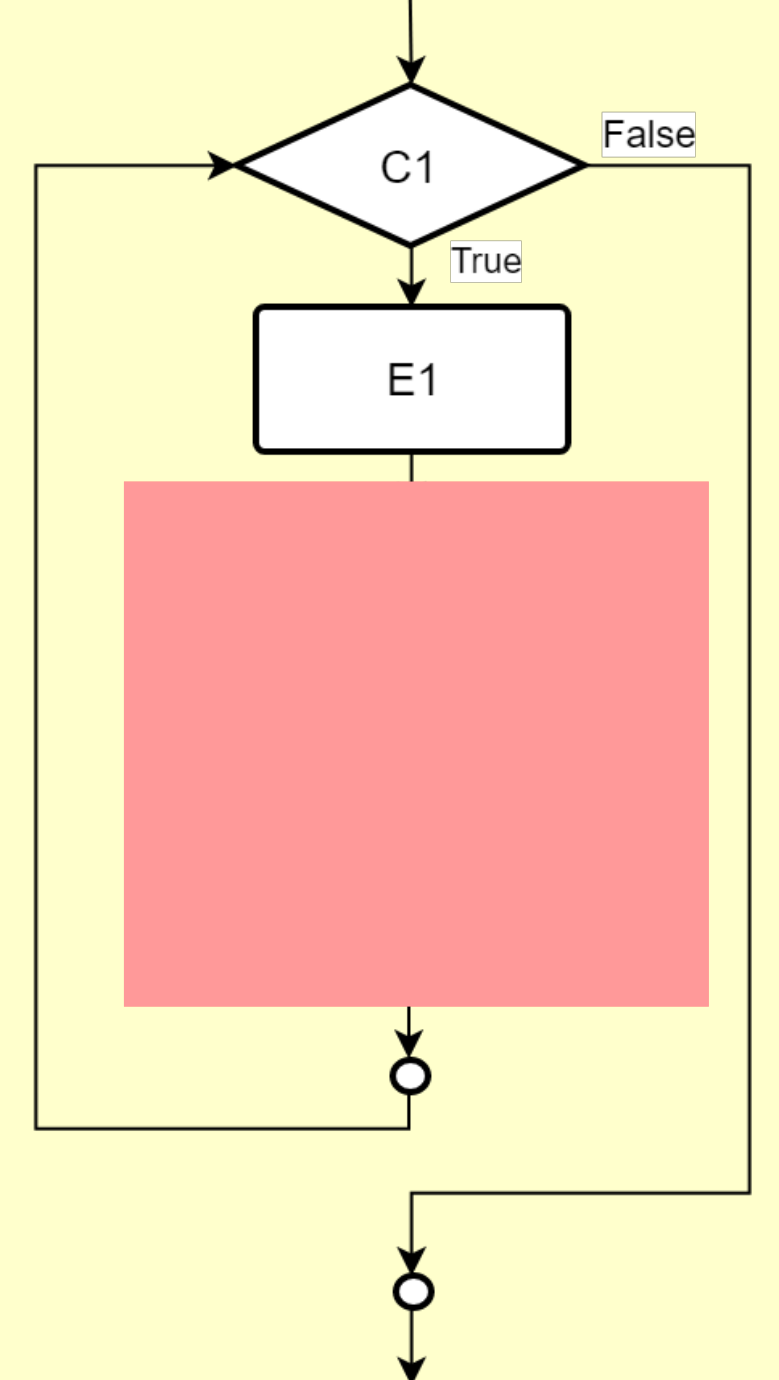
while C1:
E1
2110101 วิศวกรรมคอมพิวเตอร์ จุฬาฯ (14/09/67)
3
ตัวอย่าง: หา หรม. ของจำนวนเต็มหลาย ๆ คู่
x = input().split()
while x[0] != 'q':
a,b
= int(x[0]),int(x[1])
while b != 0:
a,b
= b, a % b
print(a)
x = input().split()
5 8
143 65
q
1
13
a b
143 65
65 13
13 0
2110101 วิศวกรรมคอมพิวเตอร์ จุฬาฯ (14/09/67)
4
แบบฝึกหัด: Factorization
def factor(N):
f = []
k = 2
while k <= N:
k += 1
return f
ถ้า
k
หาร
N
ลงตัว
ก็ วนหาร
N
ด้วย
k
จน
k
ไม่เป็น factor ของ
N
เพิ่ม
k
และจำนวนครั้งที่หาร ใส่ใน
f
N = 200, k = 2, N = 200
→
100
→
50
→
25
N = 25, k = 3
N = 25, k = 4
N = 25, k = 5, N = 25
→
5
→
1
f = [[2,3], [5,2]]
200 = 2
3
·
5
2
เอ๊ะ ทำไมเราไม่ใช้
for k
in range(2, N+1):
2110101 วิศวกรรมคอมพิวเตอร์ จุฬาฯ (14/09/67)
5
Nested Loops: for ซ้อน for
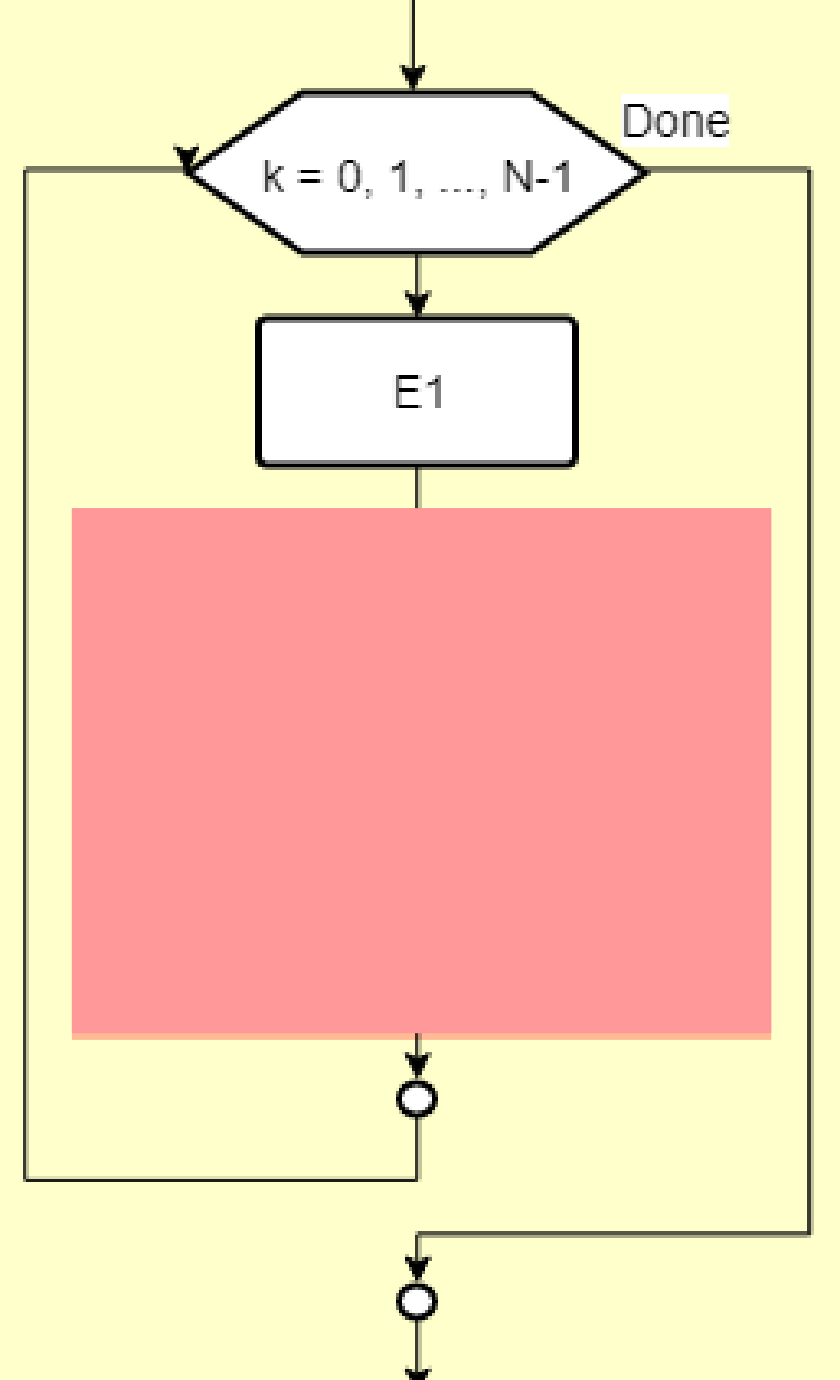
for k
in range(N):
E1
2110101 วิศวกรรมคอมพิวเตอร์ จุฬาฯ (14/09/67)
6
ตัวอย่าง
for i
in range(3):
for j in range(4):
print(i, j)
i
j
--------
0 0
1
2
3
1 0
1
2
3
2 0
1
2
3
for i
in range(3):
for j in range(i,4):
print(i, j)
i
j
--------
0 0
1
2
3
1 1
2
3
2 2
3
for i
in range(3):
for j in range(i+1,4):
print(i, j)
i
j
--------
0 1
2
3
1 2
3
2 3
แจกแจง index ของ
ทุกคู่ข้อมูลในลิสต์
2110101 วิศวกรรมคอมพิวเตอร์ จุฬาฯ (14/09/67)
7
ตัวอย่าง: ฟังก์ชันหา prefix ยาวสุดของรายการสตริง
programming
program
programmatic
programmer
progressive
prognostics
prognosis
progestins
progradation
progovernment
j
i
2110101 วิศวกรรมคอมพิวเตอร์ จุฬาฯ (14/09/67)
8
ตัวอย่าง: ฟังก์ชันหา prefix ยาวสุดของรายการสตริง
programming
program
programmatic
programmer
progressive
prognostics
prognosis
progestins
progradation
progovernment
j
i
def longest_prefix(words):
for i
in range(len(words[0])):
c = words[0][i]
for j in range(1,len(words)):
if i
>= len(words[j]) or \
c != words[j][i]:
return words[j][:i]
return words[0]
2110101 วิศวกรรมคอมพิวเตอร์ จุฬาฯ (14/09/67)
9
ตัวอย่าง: ฟังก์ชันตรวจข้อมูลซ้ำกันในลิสต์
def has_duplicate( x ):
for i
in range(len(x)-1):
for j in range(i+1, len(x)):
if x[i] == x[j]:
return True
return False
i
j
--------
0 1
2
3
1 2
3
2 3
x = [11, 34, 22, 34]
ลุยตรวจทุกคู่
หมายเหตุ
:
วิธีนี้ตรวจความซ้ำซ้อนที่ค่อนข้างช้ามาก
2110101 วิศวกรรมคอมพิวเตอร์ จุฬาฯ (14/09/67)
10
ตัวอย่าง: Pairwise Coprime
•
A set of integers can be called
coprime
if its
elements share no common positive factor
except 1.
•
A stronger condition on a set of integers
is
pairwise coprime
, which means
that
a
and
b
are coprime for every pair
(
a
,
b
)
of
different integers in the set.
•
The set
{2, 3, 4
} is coprime, but it is not
pairwise coprime since 2 and 4 are not
relatively prime.
https://en.wikipedia.org/wiki/Coprime_integers
21, 15, 35
3
×
7 3
×
5 5
×
7
21, 10, 121
3
×
7 2
×
5 11
×
11
2110101 วิศวกรรมคอมพิวเตอร์ จุฬาฯ (14/09/67)
11
ตัวอย่าง: Pairwise Coprime
def gcd(a,b):
while b != 0:
a,b
= b, a%b
return a
def is_pairwise_coprime( d ):
for i
in range(len(d)-1):
for j in range(i+1, len(d)):
if gcd(d[i],d[j]) != 1:
return False
return True
2110101 วิศวกรรมคอมพิวเตอร์ จุฬาฯ (14/09/67)
12
แบบฝึกหัด: Primitive Pythagorean Triple
•
Pythagorean triple: จำนวนเต็ม a, b และ c ที่
a
2
+ b
2
= c
2
เช่น (3, 4, 5)
•
ถ้า (a,b,c) เป็น Pythagorean triple
(ka, kb, kc) ก็เป็นด้วย โดยที่ k = 1,2,3,4,...
•
เราต้องการ Primitive Pythagorean triple คือ
Pythagorean triple (a,b,c) ที่ a,b
และ c เป็น
coprime (คือมี ห.ร.ม. เป็น 1)
•
จงเขียนโปรแกรมหา Pythagorean triple ทุกค่าที่
a
≤
b
≤
c
≤
M โดยที่ M คือ input เช่น ให้ M = 20
จะได้
[3, 4, 5], [5, 12, 13], [8, 15, 17]
https://en.wikipedia.org/wiki/Pythagorean_triple
3
4
5
2110101 วิศวกรรมคอมพิวเตอร์ จุฬาฯ (14/09/67)
13
แบบฝึกหัด: Primitive Pythagorean Triple
def gcd(a,b):
while b != 0:
a,b
= b, a%b
return a
def is_coprime(a, b, c):
???
def primitive_Pythagorean_triple( M ):
triple = []
for ???
in range( ???
):
for ???
in range( ???
):
for ???
in range( ???
):
???
return triple
2110101 วิศวกรรมคอมพิวเตอร์ จุฬาฯ (14/09/67)
14
ย้ายวงวนชั้นในไปเขียนเป็นฟังก์ชัน
def is_pairwise_coprime(d):
for i
in range(len(d)-1):
for j in range(i+1, len(d)):
a,b
= d[i],d[j]
while b != 0:
a,b
= b, a%b
if a != 1:
return False
return True
def gcd(a,b):
while b != 0:
a,b
= b, a%b
return a
#-----------------------------------
def is_pairwise_coprime( d ):
for i
in range(len(d)-1):
for j in range(i+1, len(d)):
if gcd(d[i],d[j]) != 1:
return False
return True
เข้าใจง่ายกว่า
2110101 วิศวกรรมคอมพิวเตอร์ จุฬาฯ (14/09/67)
15
ย้ายวงวนชั้นในไปเขียนเป็นฟังก์ชัน
n = int(input())
count = 0
for k
in range(n):
t = input()
c = 0
for ch
in t:
if "0" <= ch
<= "9":
c += 1
count += c
print(count)
def count_digits(s):
c = 0
for ch
in s:
if "0" <= ch
<= "9":
c += 1
return c
#-------------------------
n = int(input())
count = 0
for k
in range(n):
t = input()
count += count_digits(t)
print(count)
นับตัวเลขจากข้อมูล
หลายบรรทัด
2110101 วิศวกรรมคอมพิวเตอร์ จุฬาฯ (14/09/67)
16
break ออกไปหลาย ๆ ชั้นไม่ได้
...
for ...
...
for ...
...
if condition:
...
break
...
...
...
break จะกระโดด
ออกมาจากวงวนที่
break อยู่
...
for ...
...
for ...
...
if condition:
...
ออกไปนอกสุด
...
...
...
ถ้าต้องการให้ break
กระโดดออกมาวงนอก ๆ
จะทำอย่างไร
2110101 วิศวกรรมคอมพิวเตอร์ จุฬาฯ (14/09/67)
17
break ออกไปหลาย ๆ ชั้นด้วย ตัวแปรเสริม
...
to_outer
= False
for ...
...
for ...
...
if condition:
...
to_outer
= True
break
...
if to_outer: break
...
...
2110101 วิศวกรรมคอมพิวเตอร์ จุฬาฯ (14/09/67)
18
break ออกไปหลาย ๆ ชั้นด้วย ตัวแปรเสริม
prefix = words[0]
for i
in range(len(words[0])):
c = words[0][i]
for j in range(1,len(words)):
if i
>= len(words[j]) or \
c != words[j][i]:
prefix = words[j][:i]
อยากออกไปนอกสุด
prefix = words[0]
found = False
for i
in range(len(words[0])):
c = words[0][i]
for j in range(1,len(words)):
if i
>= len(words[j]) or \
c != words[j][i]:
prefix = words[j][:i]
found = True
break
if found: break
หา longest prefix
ของคำใน words
2110101 วิศวกรรมคอมพิวเตอร์ จุฬาฯ (14/09/67)
19
break ออกไปหลาย ๆ ชั้นด้วย การแยกออกเป็นฟังก์ชัน
...
for ...
...
for ...
...
if condition:
...
อยากออกไปนอกสุด
...
...
...
def func(...):
for ...
...
for ...
...
if condition:
...
return
...
...
#-------------------------
...
func(...)
...
2110101 วิศวกรรมคอมพิวเตอร์ จุฬาฯ (14/09/67)
20
break ออกไปหลาย ๆ ชั้นด้วย การแยกออกเป็นฟังก์ชัน
def longest_prefix(words):
for i
in range(len(words[0])):
c = words[0][i]
for j in range(1,len(words)):
if i
>= len(words[j]) or \
c != words[j][i]:
return words[j][:i]
return words[0]
prefix = longest_prefix(words)
prefix = words[0]
for i
in range(len(words[0])):
c = words[0][i]
for j in range(1,len(words)):
if i
>= len(words[j]) or \
c != words[j][i]:
prefix = words[j][:i]
อยากออกไปนอกสุด
2110101 วิศวกรรมคอมพิวเตอร์ จุฬาฯ (14/09/67)
21
Nested Lists: ลิสต์ซ้อนในลิสต์
•
เก็บข้อมูลที่ประกอบด้วยข้อมูลย่อยที่เป็นลิสต์
–
["Ranee", 1989,
["Plerng
Boon", "Bubphe
Sanniwat", "Krong
Kam"]]
•
เก็บข้อมูลหลาย ๆ ตัว ที่แต่ละตัวมีข้อมูลย่อย ๆ
–
[
[6131001021, 3.8], [6130020221, 3.7] ]
•
เก็บข้อมูลชั่วคราวเพื่อนำไปประมวลผล (เช่น sort ตามความยาว)
–
["your", "kiss, "is", "on", "my", "list"]
[ [4, "your"], [4," kiss"], [2, "is"],
[2, "on"], [2, "my"], [4, "list"] ]
•
เก็บเมทริกซ์
–
[ [1, 2, 3, 0],
[2, 3, 0, 1],
[4, 1, 2, 2] ]
1
2
3
0
2
3
0
1
4
1
2
2
2110101 วิศวกรรมคอมพิวเตอร์ จุฬาฯ (14/09/67)
22
สร้าง nested list
name = input()
byear
= int(input())
series = input().split(", ")
actress = [name, byear, series]
Ranee
1989
Plerng
Boon, Bubphe
Sanniwat, Krong
Kam
["Ranee", 1989,
["Plerng
Boon", "Bubphe
Sanniwat", "Krong
Kam"]]
2110101 วิศวกรรมคอมพิวเตอร์ จุฬาฯ (14/09/67)
23
สร้าง nested list
n = int(input())
students = []
for i
in range(n):
student_ID, gpax
= input().split()
gpax
= float(gpax)
students.append( [student_ID, gpax]
)
[
["6131001021", 3.8], ["6130020221", 3.7], ["6130150721", 2.7]]
3
6131001021 3.8
6130020221 3.7
6130150721 2.7
2110101 วิศวกรรมคอมพิวเตอร์ จุฬาฯ (14/09/67)
24
สร้าง nested list
def sort_by_length( words ):
x = []
for w in words:
x.append( [len(w), w]
)
x.sort()
for k
in range(len(x)):
words[k] = x[k][1]
["your", "kiss", "is", "on", "my", "list"]
[ [4, "your"], [4," kiss"], [2, "is"],
[2, "on"], [2, "my"], [4, "list"] ]
[ [2, "is"], [2, "my"], [2, "on"],
[4," kiss"], [4, "list"] [4, "your"] ]
["is", "my", "on", "kiss", "list", "your"]
2110101 วิศวกรรมคอมพิวเตอร์ จุฬาฯ (14/09/67)
25
ข้อควรระวัง
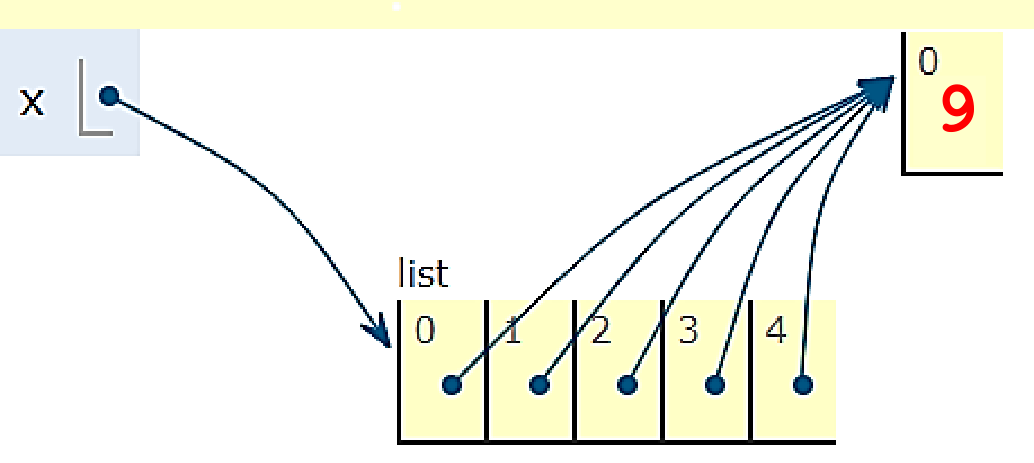
x = [0]*5
ได้
[0, 0, 0, 0, 0]
x = [[0]]*5
ได้
[[0], [0], [0], [0], [0]]
x[0][0] = 9
ได้
[[9], [9], [9], [9], [9]]
x = []
for i
in range(5):
x.append([0])
แบบนี้แต่ละช่องเป็นคนละลิสต์
9
2110101 วิศวกรรมคอมพิวเตอร์ จุฬาฯ (14/09/67)
26
แบบฝึกหัด: First Fit / Best Fit
จงเขียนโปรแกรมแบ่งรายการของจำนวนเต็มไม่เกิน
100 ออกเป็นรายการย่อย ๆ แต่ละรายการมีผลรวม
ไม่เกิน 100 ให้ได้จำนวนรายการน้อย ๆ
First Fit
[ [20] ]
[ [20], [90] ]
[ [20,10], [90] ]
[ [20,10], [90], [80] ]
Best Fit
[ [20] ]
[ [20], [90] ]
[ [20], [90,10] ]
[ [20,80], [90,10] ]
เจอลิสต์แรกที่ใส่ได้ก็ใส่เลย
เลือกลิสต์อันที่ใส่แล้ว
มีผลรวมใกล้ 100 ที่สุด
[20,90,10,80]
2110101 วิศวกรรมคอมพิวเตอร์ จุฬาฯ (14/09/67)
27
Nested List as Matrix
อ่านเมทริกซ์จาก input เก็บเป็นลิสต์ซ้อนลิสต์
[ [1.0, 2.0, 3.0, 0.0],
[2.0, 3.0, 0.0, 1.0],
[4.0, 1.0, 2.0, 2.0] ]
3
1 2 3 0
2 3 0 1
4 1 2 2
2110101 วิศวกรรมคอมพิวเตอร์ จุฬาฯ (14/09/67)
28
print_matrix( M )
กด Run แล้วเทียบกับผลลัพธ์ในกล่องข้างล่าง
[[1, 2, 3, 4]
[2, 2, 1, 3]
[2, 6, 7, 7]]
2110101 วิศวกรรมคอมพิวเตอร์ จุฬาฯ (14/09/67)
29
add_matrix(A, B)
def add_matrix(A, B):
C = []
nrows
= len(A)
ncols
= len(A[0])
for i
in range(nrows):
C.append( [0.0]*ncols
)
for j in range(ncols):
C[i][j] = A[i][j] + B[i][j]
return C
A = read_matrix()
B = read_matrix()
C = add_matrix(A, B)
print_matrix(C)
2110101 วิศวกรรมคอมพิวเตอร์ จุฬาฯ (14/09/67)
30
แบบฝึกหัด: mult(A, B)
เติมวงวนซ้อนสามชั้นตามสูตรข้างล่าง
C
i,j
=
∑
k=0
q−1
A
i,k
B
k,j
A
มีขนาด
p
×
q
,
B
มีขนาด
q
×
r,
C
มีขนาด
p
×
r
2110101 วิศวกรรมคอมพิวเตอร์ จุฬาฯ (14/09/67)
32
List Comprehension
วิธีการเขียนคำสั่งสร้างลิสต์ที่สั้น และมีประสิทธิภาพ
# ให้ x เป็นลิสต์ของ int
t = []
for e in x:
t.append(2*e)
# แปลงทุกค่าใน x เป็นอีกอย่าง
t = [ ]
t = []
for e in x:
if e >= 0:
t.append(e)
# เลือกบางค่าในลิสต์ x
t = [ ]
t = []
for e in x:
if e >= 0:
t.append(2*e)
# เลือกบางค่าในลิสต์ x มาแปลง
t = [ ]
2*e
for e in x
for e in x
if e >= 0
e
for e in x
if e >= 0
2*e
2110101 วิศวกรรมคอมพิวเตอร์ จุฬาฯ (14/09/67)
33
ตัวอย่าง: อ่านรายการของจำนวนบนบรรทัดเดียวกัน
x = input().split()
d = []
for e in x:
d.append( int(e) )
...
d = [int(e)
for e in input().split()]
...
d = [float(e) for e in input().split()]
...
ใช้ list comprehension
d = []
for e in input().split():
d.append( int(e)
)
...
2110101 วิศวกรรมคอมพิวเตอร์ จุฬาฯ (14/09/67)
34
ตัวอย่าง: เรียงลำดับสตริงตามความยาว
def sorted_by_length(s):
t = []
for e in s:
t.append( [len(e), e] )
t.sort()
r = []
for n,e
in t:
r.append( e )
return r
def sorted_by_length(s):
t = [[len(e),e] for e in s]
t.sort()
return [e for n,e
in t]
ใช้ list comprehension
2110101 วิศวกรรมคอมพิวเตอร์ จุฬาฯ (14/09/67)
35
List Comprehension เร็วกว่า
import timeit
def for_loop(n):
t = []
for i
in range(n):
t.append(n)
return t
def comprehension(n):
return [n for i
in range(n)]
def time(func):
print(timeit.timeit(func+"(1000000)",
globals=globals(), number=100))
time("
for_loop
") #
9.2609192
time("
comprehension
") #
4.7720880999999995
2110101 วิศวกรรมคอมพิวเตอร์ จุฬาฯ (14/09/67)
36